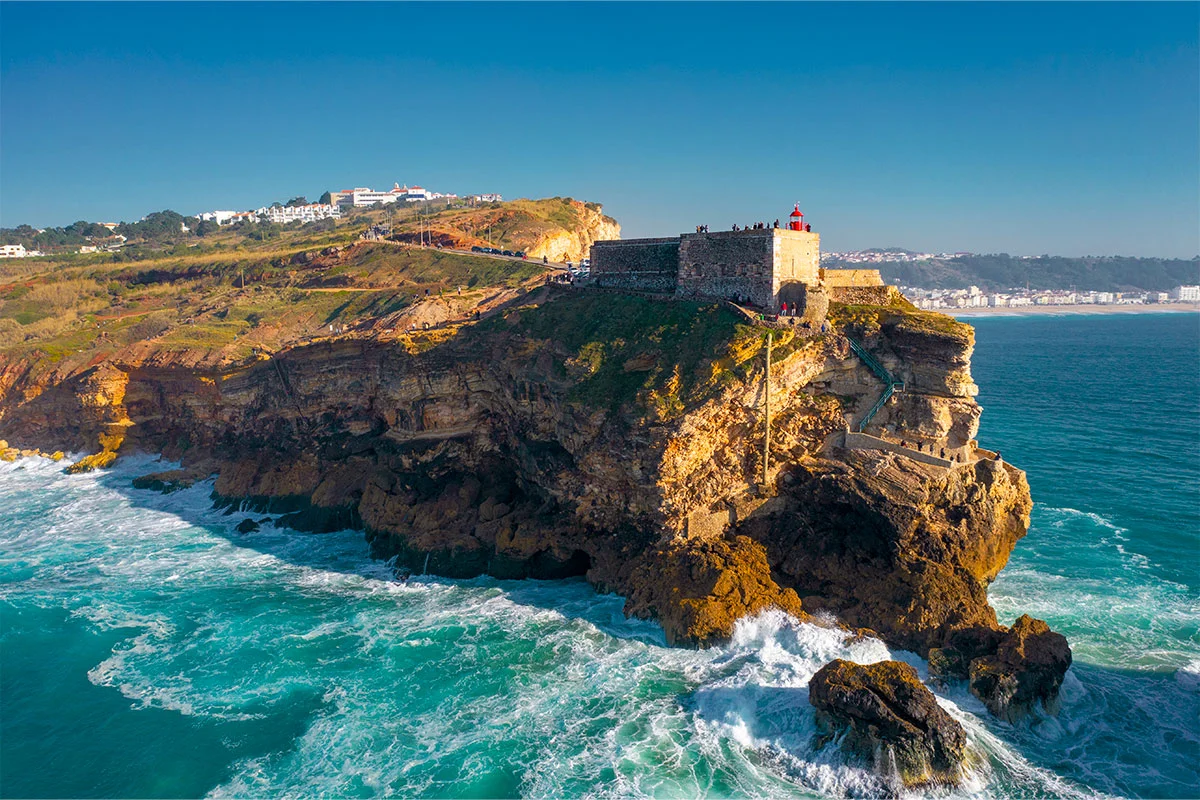
Forte de São Miguel Arcanjo
10:00–12:00
This vantage point offers a direct line of sight to the canyon where waves break. Access is available via the paved path from the parking area.

Nazaré's Praia do Norte holds the verified record for the largest wave ever surfed—86 feet, set in 2020. The question isn't whether the waves here are extreme, but why this small Portuguese fishing village produces swells that dwarf those found anywhere else on the planet.
Quick answer
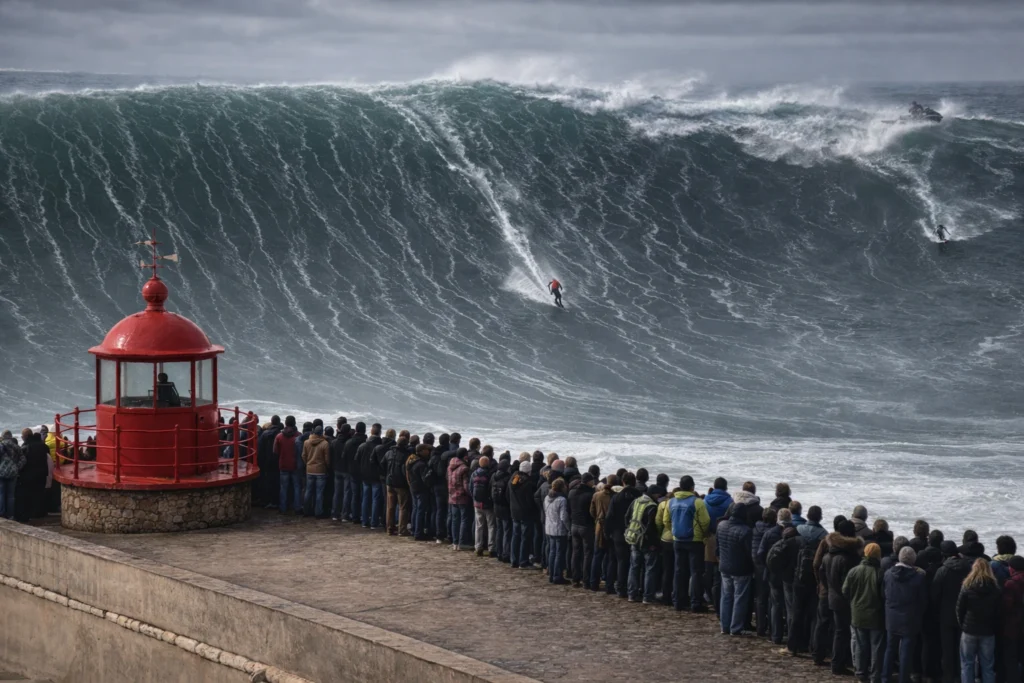
Yes, Nazaré has the biggest waves ever reliably measured. The current surfing record stands at 86 feet (26.2 meters), achieved by Sebastian Steudtner in October 2020. The Nazaré Canyon—a 16,000-foot underwater trench running perpendicular to the coast—funnels Atlantic swell energy directly onto the beach, creating conditions unmatched anywhere else in the world during the November-to-March big-wave season.
The Nazaré Canyon begins three miles offshore and plunges nearly five kilometers below the surface, deeper than any submarine feature along Europe's Atlantic coast. When winter storms generate powerful swells in the open ocean, this underwater trench acts as a hydraulic amplifier: waves traveling along the canyon floor meet waves moving over the shallower continental shelf, and the two collide at Praia do Norte with combined force. The result is a wave face that can exceed eighty feet from trough to crest. Does Nazaré have the biggest waves compared to other renowned big-wave locations? Measured records confirm it does. While surf breaks like Mavericks in California and Teahupo'o in Tahiti produce powerful waves, neither approaches the verified height achieved at Praia do Norte. Garrett McNamara's 2011 ride—initially estimated at 78 feet—put Nazaré on the global surf map, but subsequent seasons have delivered even larger swells. The World Surf League now holds the Nazaré Tow Surfing Challenge here each winter, and professional big-wave surfers consider it the proving ground for the sport's absolute limits. The underwater canyon system extends over 200 kilometers into the Atlantic, and its effect on wave formation is visible from the clifftop fort above the beach. On peak swell days, the ocean surface shows distinct interference patterns where deep-water energy meets the shallow ledge. Local fishermen have known the site's power for centuries—historical records from the 1500s describe boats avoiding the northern beach during winter storms—but scientific measurement and tow-in surfing technology have only recently quantified what makes this stretch of coast unique. Visitors watching from the Forte de São Miguel Arcanjo can observe the full wave cycle: the long-period swell approaching from the west, the visible acceleration as it enters shallower water, and the final detonation against the beach. The lighthouse trail and the southern end of the promontory provide safe vantage points. On days when the swell exceeds twenty feet, the maritime authority closes beach access, and the fort becomes the designated observation zone. The site charges a small entrance fee to the wave interpretation center, which tracks real-time buoy data and explains the mechanics that generate the largest surfable waves on Earth.
“The Nazaré Canyon funnels Atlantic energy into a single point, creating a natural wave laboratory where the ocean's absolute limits are tested every winter.”
Nazaré holds the official world record for the largest waves ever surfed due to unique underwater topography. This geological phenomenon creates a specific environment for massive wave development.
Sebastian Steudtner set the current Guinness World Record for the largest wave ever surfed on October 29, 2020, at Praia do Norte. This height was officially verified and documented by the Guinness World Records organization.
The Nazaré Canyon is a submarine gorge reaching depths of approximately 5,000 meters and extending 227 kilometers long. This deep trench directs swells toward the coast without losing energy, causing wave heights to amplify significantly.
When swells enter the canyon, they merge with smaller, independent wave trains. This interaction creates constructive interference, which results in the massive wave peaks witnessed at the site.
As waves move from the deep canyon into shallow water, the sudden change in depth causes the bottom of the wave to slow down while the top continues forward. This process forces the wave to pitch upward, creating the characteristic large, hollow faces.
The unique shape of the continental shelf acts as a refraction lens for incoming Atlantic swells. This configuration consistently focuses energy onto the Praia do Norte break, differentiating it from other surfing locations.
10:00–12:00
This vantage point offers a direct line of sight to the canyon where waves break. Access is available via the paved path from the parking area.
Morning hours
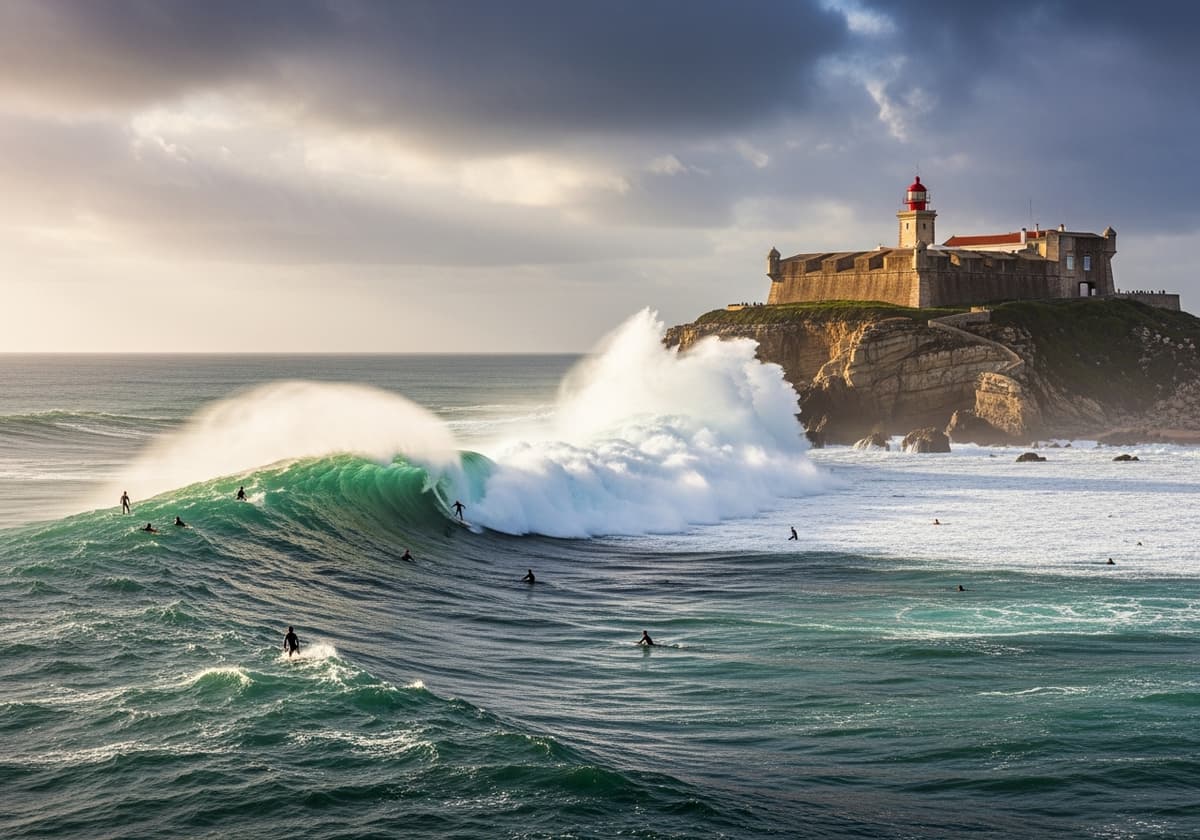
Capture the scale of the shoreline from the sand level during lower tide conditions. Use caution as wave height varies.
Mid-morning
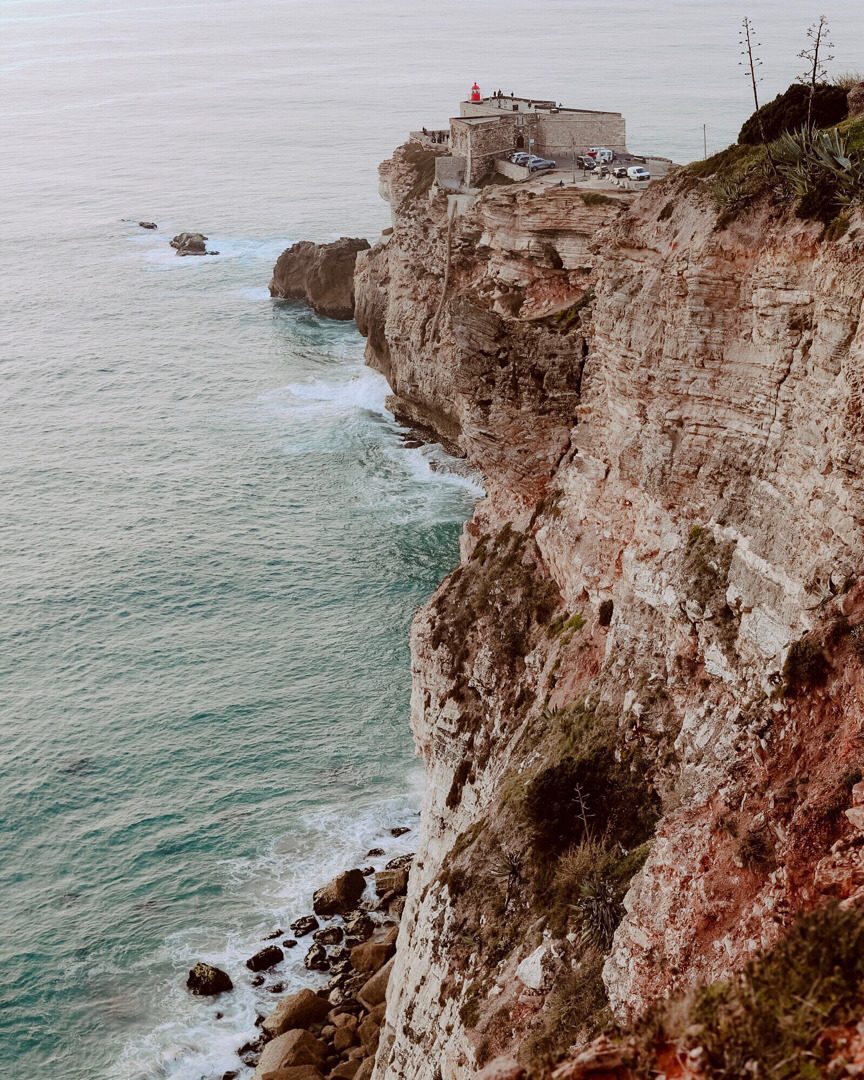
This elevated walkway provides a side-profile perspective of the lighthouse against the breaking swell. It serves as a transition point between the town and the fort.
Early morning
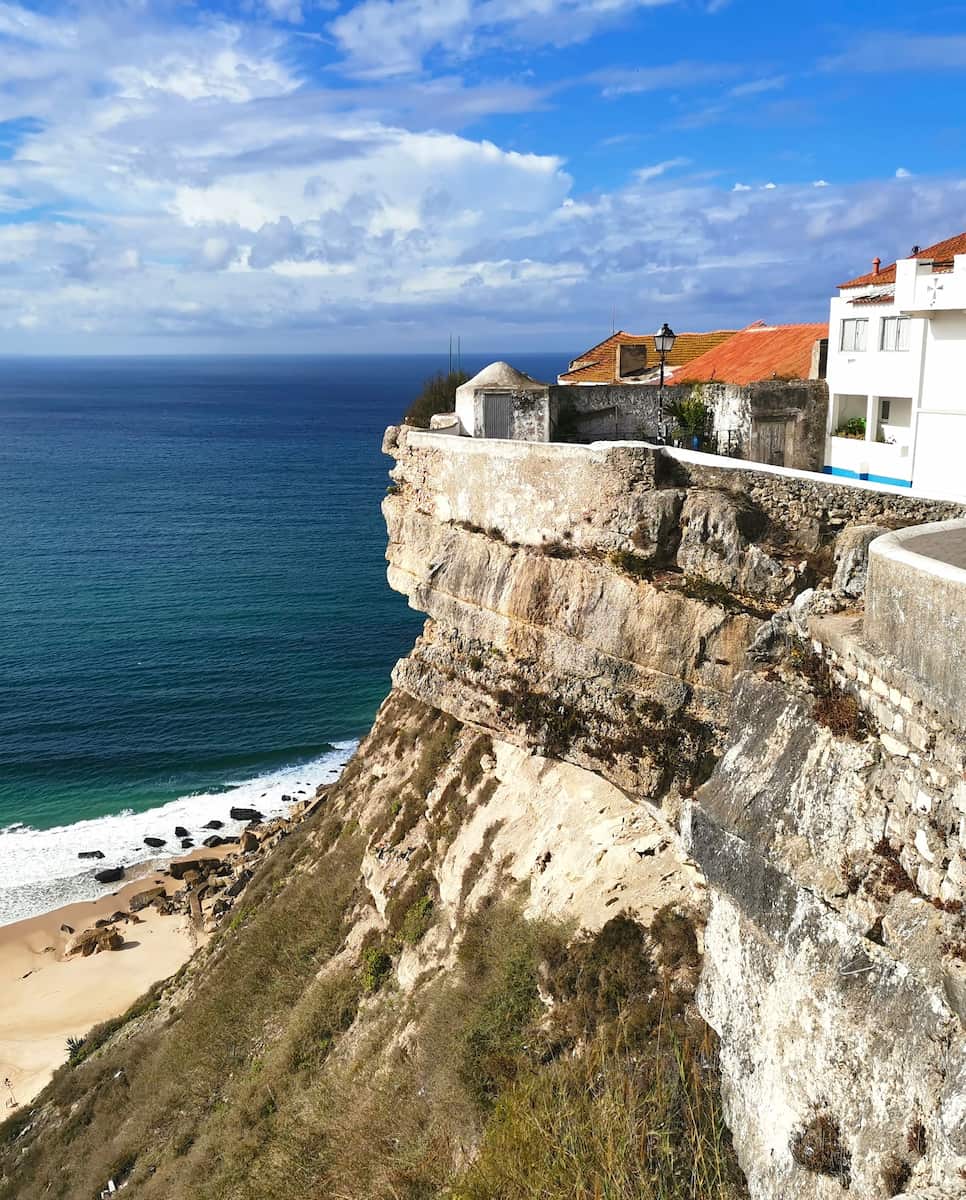
Located in the upper town, this site provides an expansive overlook of the entire coastline and the ocean horizon. It is a location for wide-angle photography.
The interpretation centre at the Forte de São Miguel Arcanjo operates daily to accommodate visitors interested in the history of Nazaré's waves.
The Forte de São Miguel Arcanjo is located on the headland of Nazaré, overlooking Praia do Norte. The most direct approach from the town center is via the cliff-top access road leading toward the lighthouse.
Drive via Estrada do Farol to the designated parking area
Walk from the town center through the Sítio neighborhood following signs for Farol
Request a local taxi from the town center to Estrada do Farol
Best arrival window: 10:00–12:00 — Arrive early to beat the crowds and secure a prime viewing position on big wave days.
Everything you need to know about does nazare have the biggest waves
Yes, Nazaré holds the record for the largest waves ever ridden due to the unique underwater Nazaré Canyon. This bathymetric feature amplifies swell energy as it approaches the coastline.
The season for these swells typically runs from October to March when Atlantic storms are most active. You should monitor surf forecasts closely during these months.
The phenomenon is driven by the Nazaré Canyon, which funnels and concentrates wave energy toward Praia do Norte. This submarine valley depth change creates the intense surf experienced at this location.
No, the massive swells are highly seasonal and weather-dependent rather than a daily occurrence. Outside of winter months, the sea conditions are often much calmer and do not feature the record-breaking peaks that answer does nazare have the biggest waves.
Access to the Forte de São Miguel Arcanjo, which provides the prime vantage point, requires an entrance fee of 2 EUR. You can purchase this entry directly at the site.
These waves are exclusively for professional big-wave surfers due to the extreme danger and scale involved. If you are interested in the coast, consider a local buggy tour to explore the area safely.
To secure a prime viewing position, follow the best arrival window of 10:00–12:00. Arriving early helps you avoid crowds at the lighthouse and interpretation centre.